

Is the 557% Tungsten Surge Outperforming Gold? The "Industrial Teeth" Storm is Here
In this article
- Overview
- 1.Geopolitical Chess: From “Obscure Metal” to Strategic Trump Card
- 2.Market Reality: The Extreme Tug-of-War Over Scarcity
- 3.Finding a Way Out: The Urgent Need for Alternatives and Cost Reduction
- 4.Precision Substitution: How PCD Wire Drawing Dies Combat the Tungsten Shock
- 5.relink.tools: Your Solution for Alternative and Cost-Reduction Strategies
Overview
In the latest financial reports for 2026, a traditionally low-profile strategic metal has completely “gone rogue.” Its frantic rally has not only eclipsed the stellar performances of gold and copper but has also thrust global defense industries and high-end manufacturing into the eye of a geopolitical storm. That metal is Tungsten. As China—the world’s largest producer—tightens its export valves and Western military demand explodes due to regional conflicts, a massive repricing of “strategic scarcity” is unfolding.
1.Geopolitical Chess: From “Obscure Metal” to Strategic Trump Card
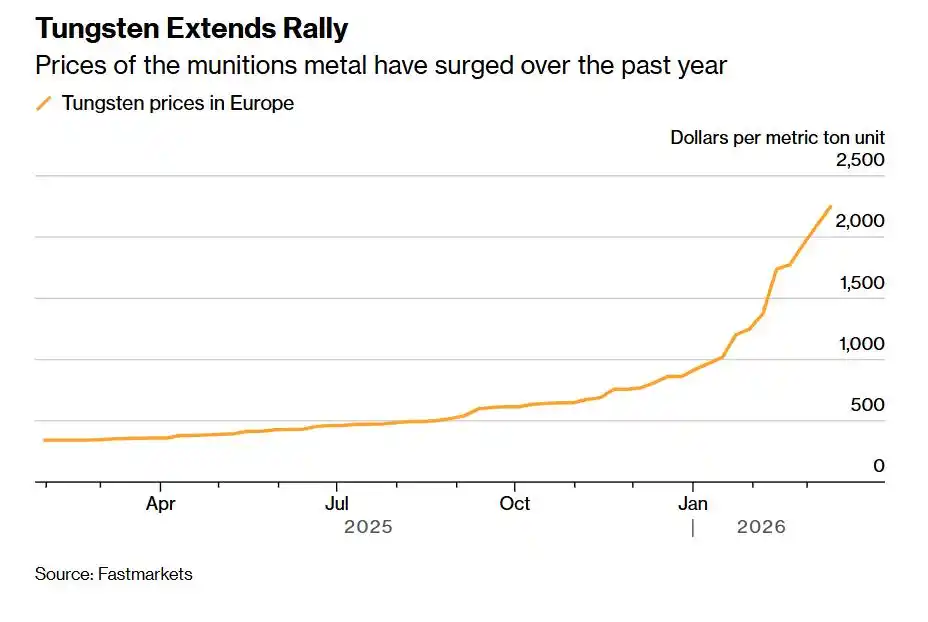
Data from March 2026 reveals that since the Chinese government placed certain tungsten products on its export control list in February 2025, the European APT (Ammonium Paratungstate) benchmark price has staged a “wild” rally of 557%, hovering at a record high of $2,250 per mtu.
This is no mere speculative bubble. On the chessboard of modern warfare and high-end manufacturing, tungsten is a critical “bottleneck” raw material. With its ultra-high melting point, density, and hardness, it serves as the core material for drones, missiles, armor-piercing projectiles, and high-performance aerospace components. Simultaneously, it acts as the “industrial teeth” in semiconductor chip conductive layers and high-end industrial drill bits. With China controlling 79% of global mine production and tightening quotas, while Western defense contractors remain heavily dependent on these imports, the price surge became an inevitability.
2.Market Reality: The Extreme Tug-of-War Over Scarcity
The tungsten market is relatively small, opaque, and lacks liquidity, meaning any supply-side tremor triggers massive price elasticity. As George Heppel, an analyst at BMO Capital Markets, noted: “Aside from lithium in 2021, I have never seen a metal market where the supply side is as tight as tungsten is right now.”
The current landscape is stark: Western governments desperately need this material to sustain a surge in defense spending (for instance, Germany expects to raise defense spending to 3.5% of GDP by 2029), yet new Western supply sources will take approximately 24 months to materialize. This rally represents a triple stack of “Geopolitical Premium + Supply Chain Reconstruction Premium + Military Consumption Premium.”
3.Finding a Way Out: The Urgent Need for Alternatives and Cost Reduction
Faced with the uncertainty of tungsten prices following this “breakout” and the likelihood of long-term high costs, downstream industries reliant on tungsten and cemented carbide are facing immense survival pressure. Traditional cemented carbide tools and dies, with their high raw material cost ratios, are extremely sensitive to these price fluctuations. In this climate, seeking high-quality alternatives and more efficient production methods is no longer just about optimization—it’s about maintaining industrial competitiveness.
While some large-scale users mitigate risk through scrap recycling, the barrier to entry for small and medium-sized enterprises is high. A more practical path lies in material substitution and the optimization of processing technologies.
4.Precision Substitution: How PCD Wire Drawing Dies Combat the Tungsten Shock
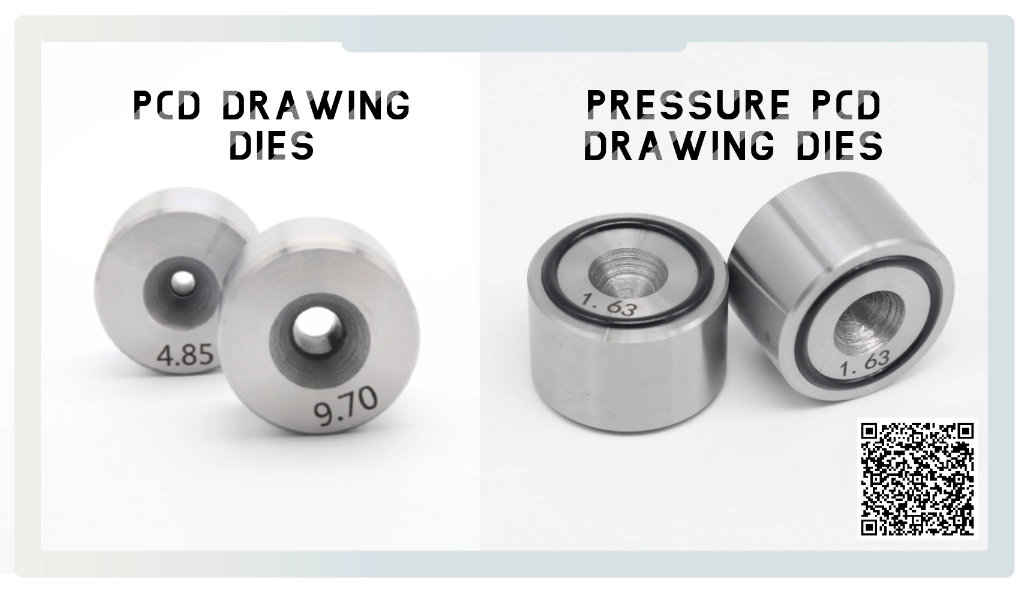
In industrial sectors involving wire drawing, Cemented Carbide (Tungsten Carbide/WC) dies have long been the standard. However, with tungsten prices skyrocketing, the search for high-performance alternatives has become imperative. Polycrystalline Diamond (PCD) wire drawing dies represent a premier solution.
Compared to traditional tungsten carbide dies, PCD dies offer significant advantages in wear resistance, service life, and processing efficiency. While the initial procurement cost may be higher, the long-term benefits are substantial: extreme wear resistance reduces the frequency of die changes, and superior fracture toughness ensures high-precision processing. This significantly lowers the unit production cost over time.
In a future where tungsten resources are restricted and carbide costs remain volatile, PCD dies—which rely on carbon sources rather than rare strategic metals—serve as a “safe harbor” for the wire drawing industry.
5.relink.tools: Your Solution for Alternative and Cost-Reduction Strategies
In navigating the tungsten price storm, relink.tools is dedicated to providing professional support.
We focus not only on the R&D and manufacturing of high-end tools and dies but also on the pain points of material performance versus cost in the wire drawing process. Our PCD wire drawing dies, with their exceptional durability and stability, are designed to help customers achieve cost reduction and efficiency gains during periods of tungsten price volatility. By reducing dependence on a single high-priced material, we help ensure production continuity and a competitive edge.
Contact Us Now! to learn more about PCD wire drawing dies and discove
Did this answer your question?