
In-Depth Analysis of Investment Opportunities in the Tungsten Carbide Market
In this article

In 2025, the strategic metal tungsten surged by over 220% for the year, outperforming gold. The upward momentum continued unabated in 2026, with black tungsten concentrate rising over 53% since the start of the year.
Today’s Tungsten Ore Market Price
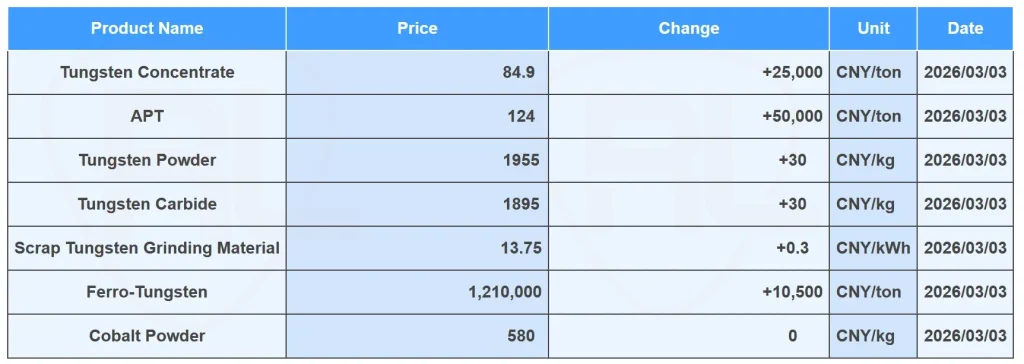
Surpassing even gold’s gains, the strategic metal tungsten made a strong entrance in 2025 with a staggering annual increase exceeding 220%. Entering 2026, this upward momentum shows no signs of slowing. As of February 24, black tungsten concentrate reached 705,000 yuan per ton—a 53.26% increase since year-start. Ammonium paratungstate (APT) traded at 1.05 million yuan per ton, up 56.72%, while tungsten powder hit 1,740 yuan per kilogram, surging 61.11%. Leading company Zhangyuan Tungsten significantly raised its long-term contract procurement quotes in the latter half of February.
Dubbed the “industrial teeth,” tungsten possesses high melting points and exceptional hardness, making it an indispensable core material for modern industry, military applications, and high-end manufacturing. As early as 1991, China designated tungsten as a protected mining mineral.
Why Tungsten Prices Keep Climbing: Supply and Demand Dynamics
The underlying logic behind this surge in tungsten prices lies in the dual resonance of supply contraction and demand expansion. On the supply side, China holds 52% of the world’s tungsten reserves and accounts for 83% of global production, demonstrating a clear resource advantage. The first batch of tungsten concentrate mining quotas for 2025 fell 6.5% year-on-year, while stricter environmental inspections have restricted off-balance-sheet production.
Exports have also contracted, with China’s tungsten product shipments declining 27.5% year-on-year in 2025. This was compounded by export controls imposed in February 2025 on products like ammonium paratungstate, further tightening overseas supply. Overseas tungsten mining projects face slow capacity ramp-up, with new production additions potentially falling short of 5,000 tons in 2026.
On the demand side, robust growth is driven by new energy, defense, and semiconductor sectors. Photovoltaic tungsten filaments are accelerating the replacement of traditional carbon steel wires, with penetration rates projected to exceed 40% by 2025. Defense applications are experiencing surging demand for tungsten alloys, while cemented carbide is seeing a moderate recovery supported by equipment upgrade policies. Inventory replenishment and stockpiling sentiment are prominent across the supply chain. Low midstream APT inventories, coupled with increased long-term contract pricing, have amplified price elasticity.
Market Impact and Long-Term Outlook
Price hikes have far-reaching impacts: significantly improving profitability at the upstream resource level; restoring margins in midstream smelting; and increasing cost pressures for downstream cemented carbide manufacturers, forcing them to focus on high-end products. Tungsten scrap recycling rates are projected to rise from 21% in 2023 to over 30% by 2025, enabling recycled tungsten to marginally substitute primary tungsten.
Long-term outlook indicates a widening global tungsten supply-demand gap from 2026 to 2028, reaching 18,500 tons, 18,800 tons, and 19,200 tons respectively.
#TungstenCarbide #TungstenCarbideMarket #AmmoniumParatungstate #APT
Did this answer your question?