

Choosing Tungsten Carbide Die Grades for Manufacturing
In this article
- **1. What is a Tungsten Carbide Die and Why Does the Grade Matter?**
- **2. Key Factors in Selecting Tungsten Carbide Die Grades**
- **A. Cobalt Content (The Binder)**
- **B. Grain Size (The Structure)**
- **C. Application Environment**
- **3. Tungsten Carbide Die vs. Steel vs. [PCD Die](/wire-cable-manufacturing/wire-drawing-die/pcd-die/): Which is Better?**
- **4. Common Challenges: Maintenance and Cracking**
- **5. Conclusion: The Strategic Value of Quality Carbide**
- **People Also Ask (Quick Summary)**

In the world of industrial manufacturing, tungsten carbide dies are the unsung heroes. From shaping the wires that power our cities to forming the fasteners that hold our aircraft together, these tools operate under extreme pressure and temperature. However, not all carbide is created equal. Selecting the correct tungsten carbide die grades is the single most important decision for maximizing tool life and reducing production costs.
In this guide, we will analyze what makes a grade “high performance” and how to navigate the technical trade-offs between hardness and toughness.
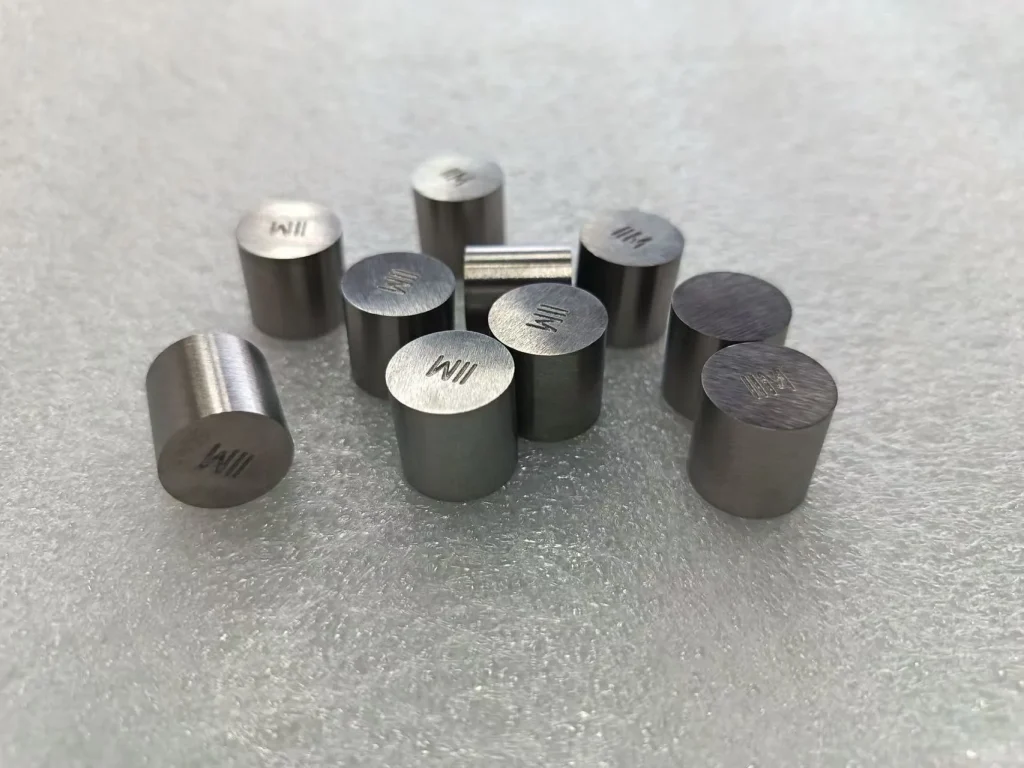
1. What is a Tungsten Carbide Die and Why Does the Grade Matter?
A tungsten carbide die is a precision tool used to cut, shape, or form materials like steel and alloys. Its primary advantage over traditional tool steel is its extreme hardness—often exceeding 80 Rockwell C, whereas high-quality steel typically peaks around 60 Rockwell C.
The “grade” of tungsten carbide refers to its chemical composition, specifically the ratio of Tungsten Carbide (WC) grain size to the Cobalt (Co) binder content. This ratio determines the die’s mechanical properties:
-
Hardness: Its ability to resist surface wear and abrasion.
-
Toughness: Its ability to withstand impact without cracking or chipping.
2. Key Factors in Selecting Tungsten Carbide Die Grades
Choosing the right grade is a balancing act. Here are the three pillars of grade selection:
A. Cobalt Content (The Binder)
Cobalt acts as the “glue” that holds the hard carbide grains together.
-
Low Cobalt (3% – 6%): Increases hardness and wear resistance. Ideal for fine wire drawing where the impact is low but abrasion is high.
-
High Cobalt (12% – 25%): Increases toughness and impact resistance. Essential for heavy-duty applications like cold heading or large fastener forming, where the die must absorb significant shock.
B. Grain Size (The Structure)
-
Sub-micron Grains: Provide a much harder surface, perfect for high-precision extrusion where surface finish is critical.
-
Coarse Grains: Offer better resistance to thermal fatigue and impact, often used in heavy mining or large-scale metal forming.
C. Application Environment
Will the die get wet? While tungsten carbide does not rust like steel, it can oxidize or suffer from “leaching” if exposed to certain chemicals. For wet environments, specialized corrosion-resistant grades (often using Nickel as a partial binder) are required.
3. Tungsten Carbide Die vs. Steel vs. PCD Die: Which is Better?
A common question in the industry is: Are carbide dies worth the investment?
| Feature | Tool Steel | Tungsten Carbide | PCD (Diamond) |
| Hardness | Moderate | Very High | Extreme |
| Lifespan | Short | Long (15-30+ years) | Ultra-Long |
| Cost | Low | Moderate | High |
| Best Use | Short runs / Soft metals | High-volume production | Fine, high-speed wire |
While PCD (Polycrystalline Diamond) dies offer the longest life for fine wire drawing, tungsten carbide die grades provide the best ROI for most industrial applications because they are easier to shape and much tougher than diamond.
4. Common Challenges: Maintenance and Cracking
Despite its strength, tungsten carbide is brittle. Can tungsten carbide crack? Yes. It can chip if subjected to sudden, unaligned impacts or if the brazing process creates internal stress during cooling.
Pro-Tips for Longevity:
-
Alignment: Ensure the die is perfectly centered in the press to avoid uneven wear.
-
Lubrication: While some claim carbide doesn’t need lube, a light oil or specialized lubricant significantly reduces friction and heat build-up.
-
Controlled Temperature: Avoid rapid heating or cooling to prevent micro-cracks.
5. Conclusion: The Strategic Value of Quality Carbide
Since 2024, tungsten carbide scrap prices have surged over 200%, reflecting the growing global demand for this critical material. Investing in the right tungsten carbide die grades today—specifically those sourced from regions with deep carbide heritage like Zhuzhou, China—is not just about buying a tool; it is a strategic move to stabilize your supply chain and optimize your production ROI.
At Relink, we specialize in matching your specific manufacturing challenges with the perfect carbide grade. Whether you need high-wear resistance for fine wire or high-impact toughness for heavy fasteners, our 12+ years of expertise ensures you get the right tool for the job.
People Also Ask (Quick Summary)
-
Does tungsten carbide dull quickly? No, but it can chip if mishandled. It holds an edge significantly longer than steel.
-
Is it waterproof? Yes, it is highly resistant to corrosion and does not rust under normal conditions.
-
Is it worth the money? Absolutely. A single carbide die can outlast dozens of steel dies, drastically reducing downtime.
Ready to optimize your production? Contact us at Relink Tools for a technical consultation on the best carbide grades for your application.
Keywords :
#TungstenCarbideDieGrades #CarbideDieSelection #TungstenCarbideProperties #WireDrawingDies #IndustrialTooling #CarbideWearResistance
Did this answer your question?